
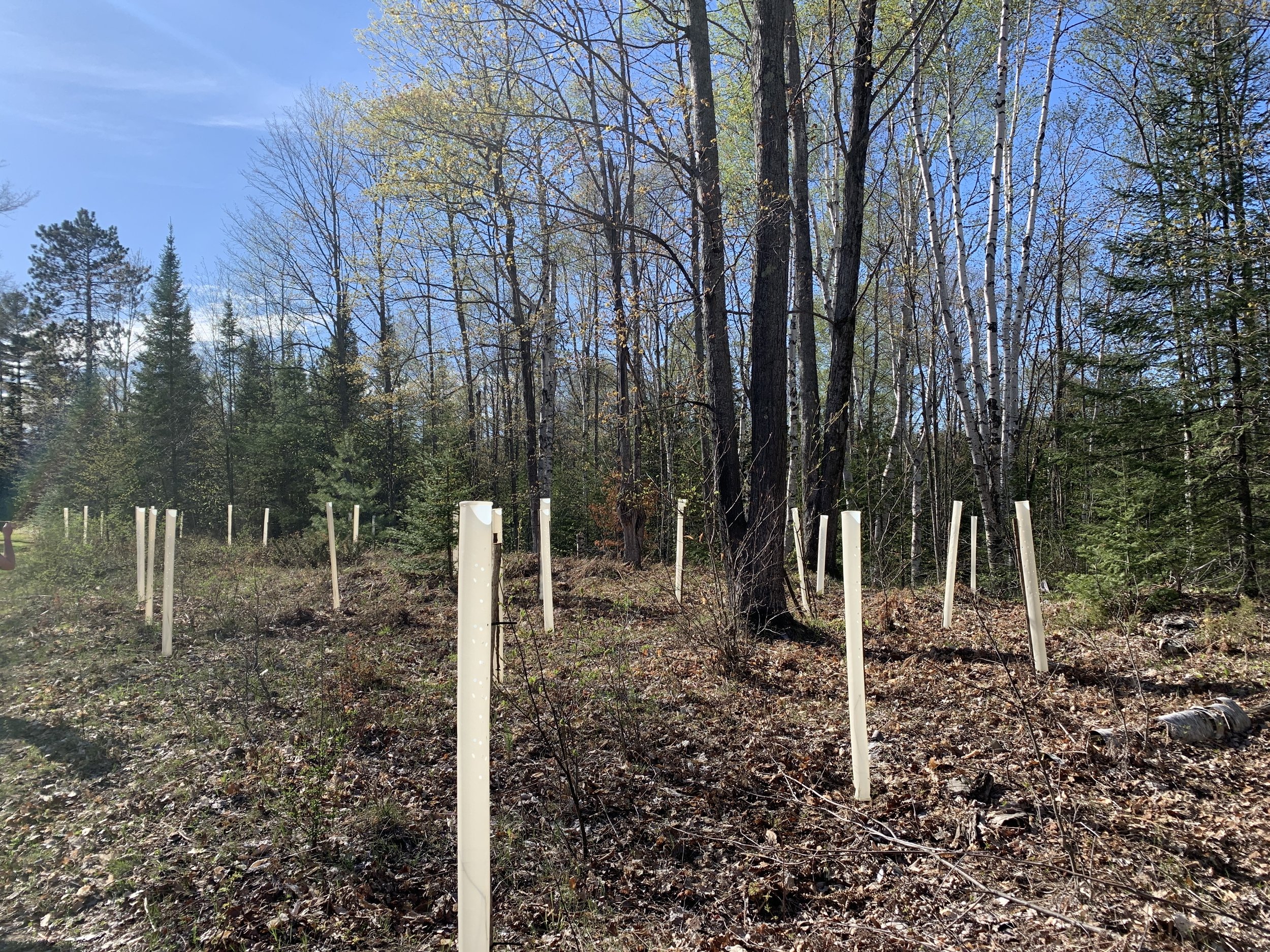
About Deer Browse and Deer Browse Protection
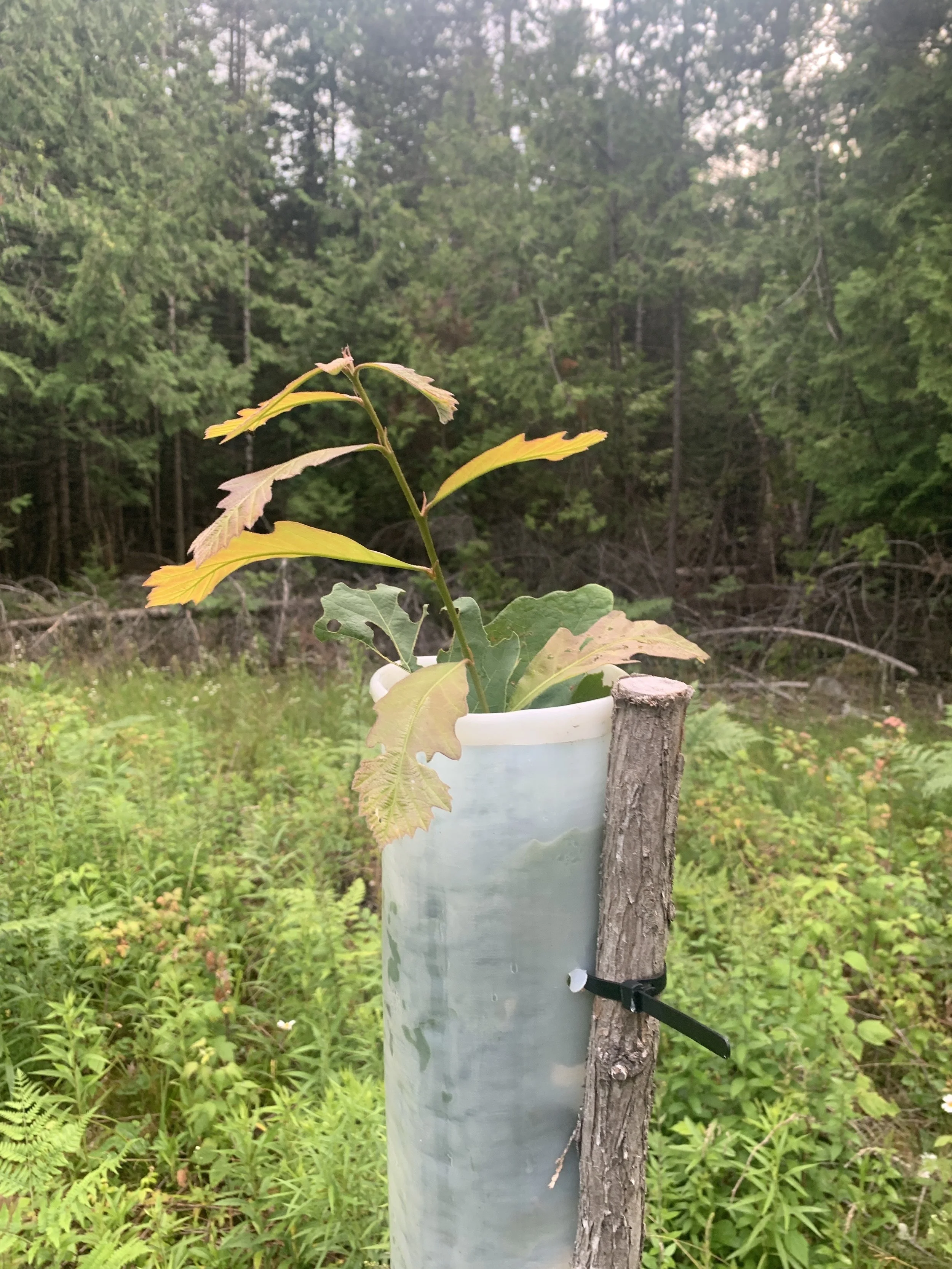
This image shows a swamp white oak emerging from a 5' tree tube. There has been 0% survival of hardwood seedlings planted without deer browse protection on this site and nearly 100% survival of tubed seedlings. Tree species planted on this site include northern red oak, bur oak, swamp white oak, bitternut hickory, common hackberry, American sycamore, sugar maple, red maple, Kentucky coffeetree, American hazelnut, American chestnut, buartnut, yellow birch, tulip tree, black elderberry, and winterberry. No survival or growth has been observed on unprotected seedlings on this property.
Deer Browse Protection
Throughout the lower peninsula of Michigan, white-tailed deer are notoriously voracious browsers (eaters) of tree regeneration. They especially like hardwoods, shrubs, and select conifers (especially white cedar, hemlock, and occasionally white pine). In most areas of Presque Isle and Cheboygan Counties it is very important that you protect these seedlings from deer browse using tree tubes/shelters, fencing, cages, or other strategies.
As District Forester, I feel that it is important that I reach anyone buying these sensitive species to remind you that in rural areas tree tubes are almost essential to the survival of seedling trees due to the damage from deer browse. These tubes also have other benefits: they create a warm, humid micro-environment that improves seedling survival and early growth.
They can be left on the tree until the trunk is nearing the diameter of the tube, or they can be removed once the majority of the canopy is above deer browse height (about 5-6 feet). The key is to wait until the trees have been growing above the height of the tube for several years and their trunk is strong enough to stand upright without the support of the tube. Growing out of the tube exposes the trees to wind, which forces them to strengthen their trunks over time.
I have also made make-shift cages out of extra fencing I had around, but this is more laborious, and the hard edges of grid fencing and chicken wire often damage the leaves of the tree if they rub against the fencing in a breeze. If you choose to make shelters/cages out of fencing, make sure they are wide enough to accommodate the spreading branches of the seedling, without the leaves touching the fence, until it is 6-7' tall. 4' diameter, 4' tall cages made from woven-wire grid fencing have worked well for swamp white oaks that I planted several years ago.
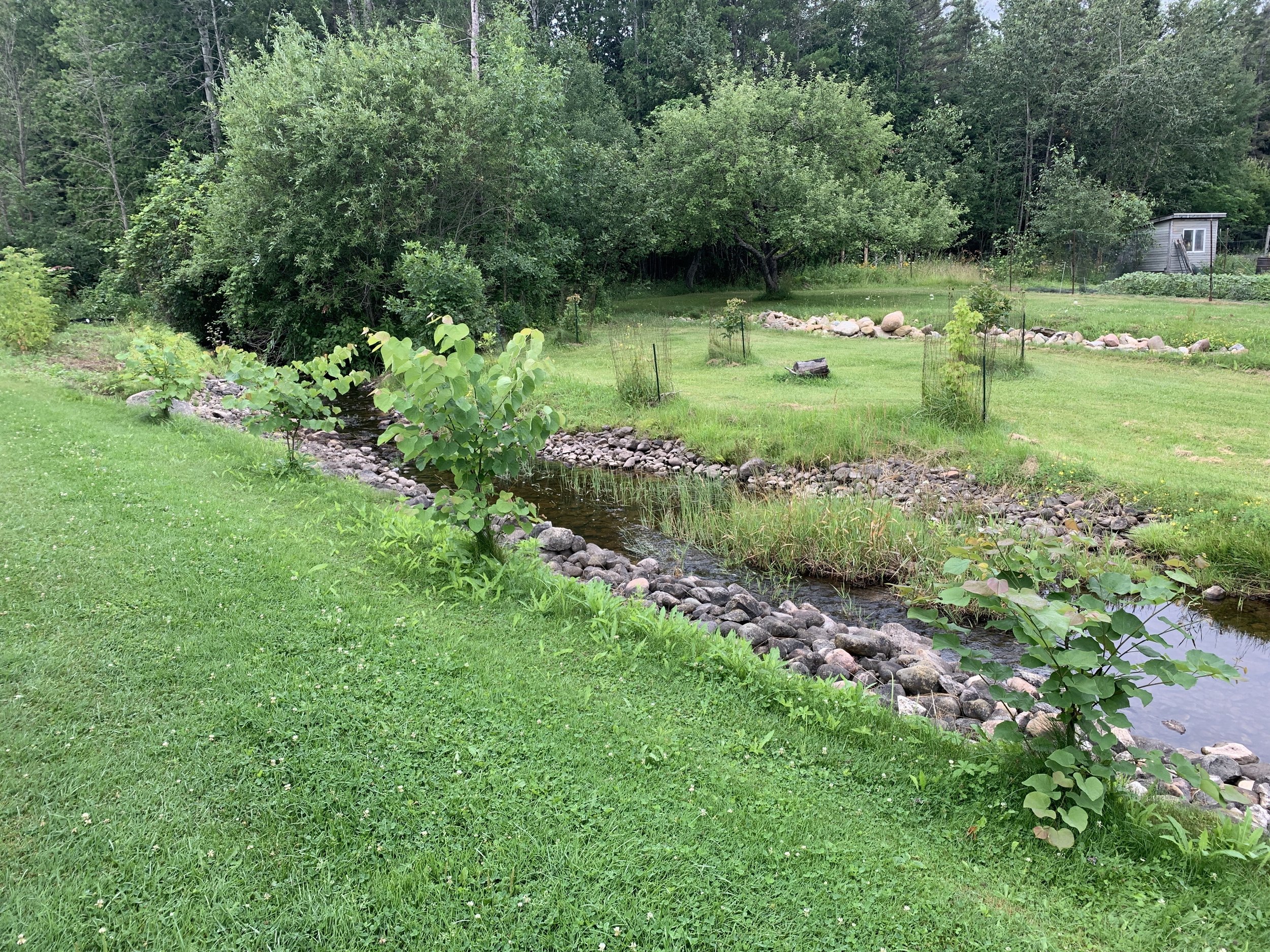
In this picture there are redbud shrubs that were fenced to protect them from deer until they were large enough and growing fast enough to overcome deer browse in this location. Across the crick are several oaks and maples that have 4' diameter and 4' tall woven wire cages protecting them from deer browse. The cages can be shorter than the tubes because their diameter keeps the deer far enough away from the sapling at 4' tall that they cannot reach the buds, or it's not worth the effort. Note that the support for these cages are metal stakes, all oriented in the same direction. These trees are planted in a floodplain, and the orientation of the stakes on the upstream side helps them resist washing away in spring floods.
Sturdy pine or oak stakes are best to support these tubes and cages. Bamboo stakes rot quickly and will need to be replaced. In my plantings, I have collected small diameter cedar stems from dead trees on our property to serve as stakes. These also work well.
Below are links to a document prepared by Josh Shields, Ph.D., District Forester for Manistee and Lake Counties, and other resources about deer browse protection. The document developed by Josh is full of tree planting recommendations, including a section titled "Protection From Herbivory". This section covers the strategies available for protecting your seedlings and increasing survival.
Tree Planting Information From Dr. Shields at Manistee Conservation District
Tree Shelter/Tube Information from Penn State University
Low-Cost Fence Designs to Limit Deer Impacts from
Cornell University
Since they are so important to the survival of many hardwood species, we have priced our tree tubes to make them as affordable as possible.
Please contact me if you have any questions!
Jacob Grochowski, Forester for Presque Isle and Cheboygan Counties
989-734-5202
jacob.grochowski@macd.org
Thank you for your time and your support! Happy tree planting!
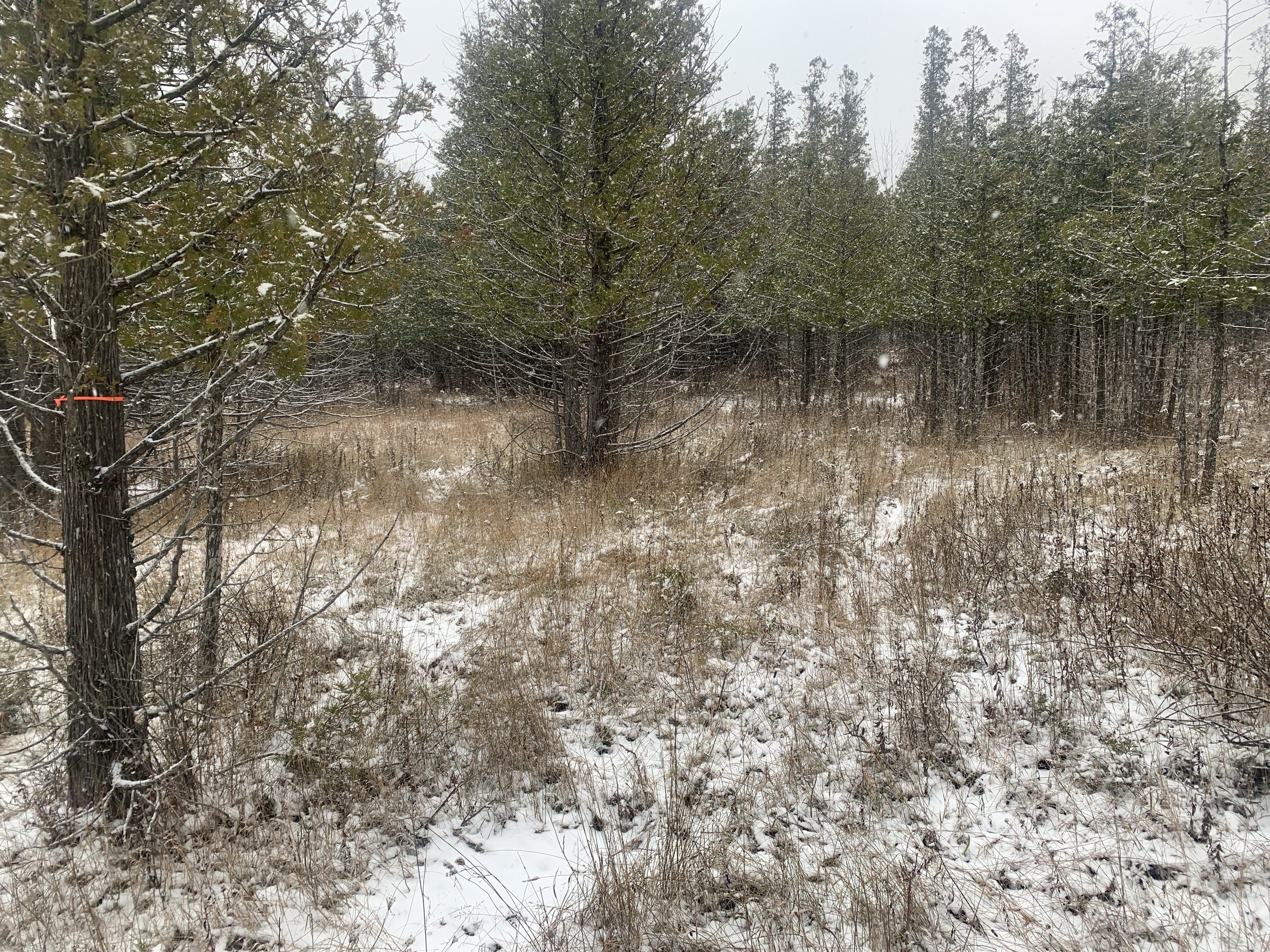
A very visible "browse line" on a stand of white cedar. The deer have eaten all living foliage below 5' high on these trees. Note that there are no living saplings. This is because at current deer populations, no saplings can grow beyond browse height without being damaged to the point of mortality. This phenomenon on white cedar is less common in areas with a large amount of limestone in the soil (areas quarried along the Lake Huron shoreline, for example).
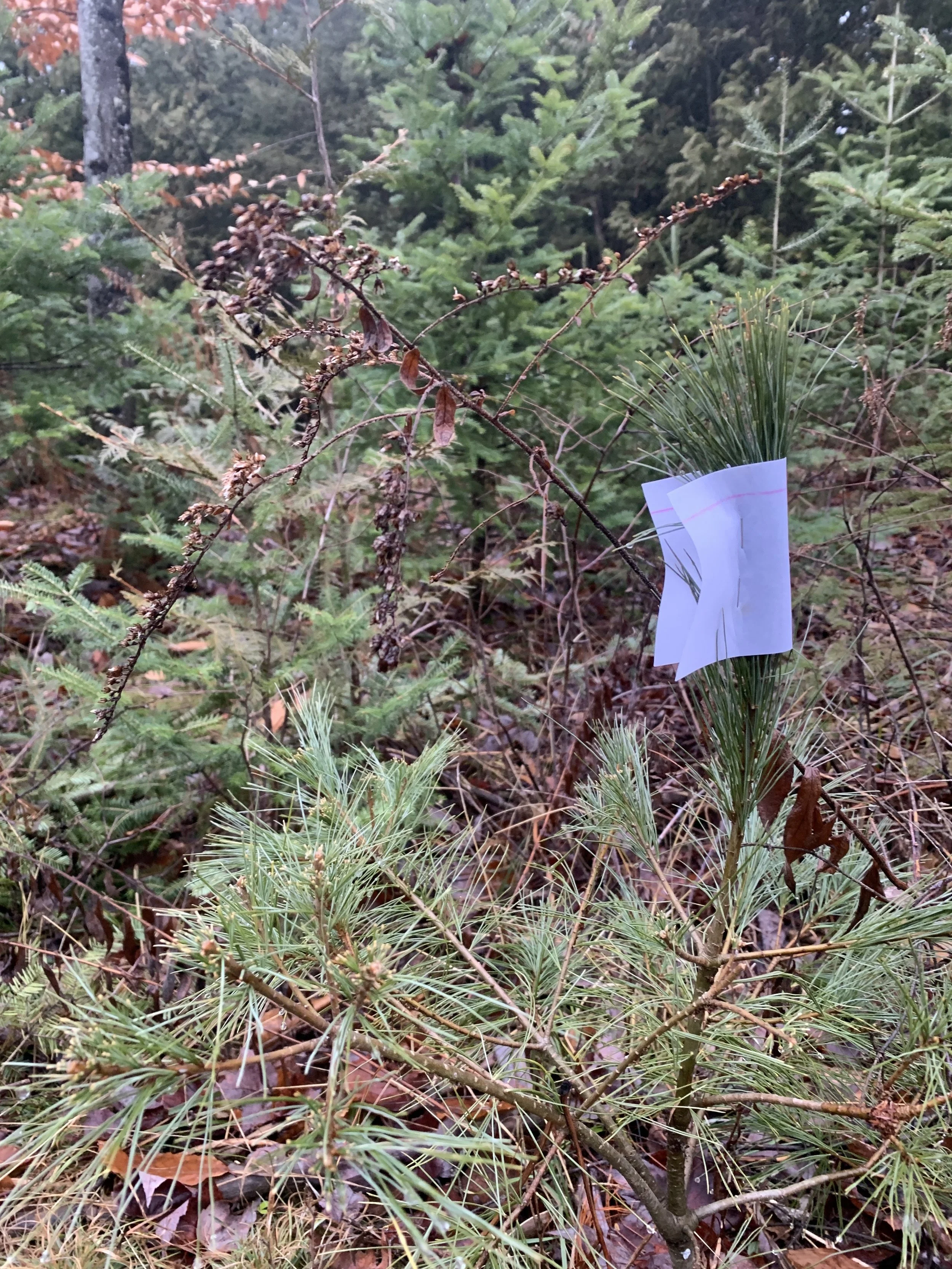
This image depicts a method of deer browse protection called “bud capping”. A small piece of paper is wrapped around the terminal bud of a conifer and stapled into place. In the spring, the new growth extends vertically out of the folded paper, and the paper biodegrades over time. Note in this image that all of the unprotected buds on this white pine sapling have been browsed by deer.
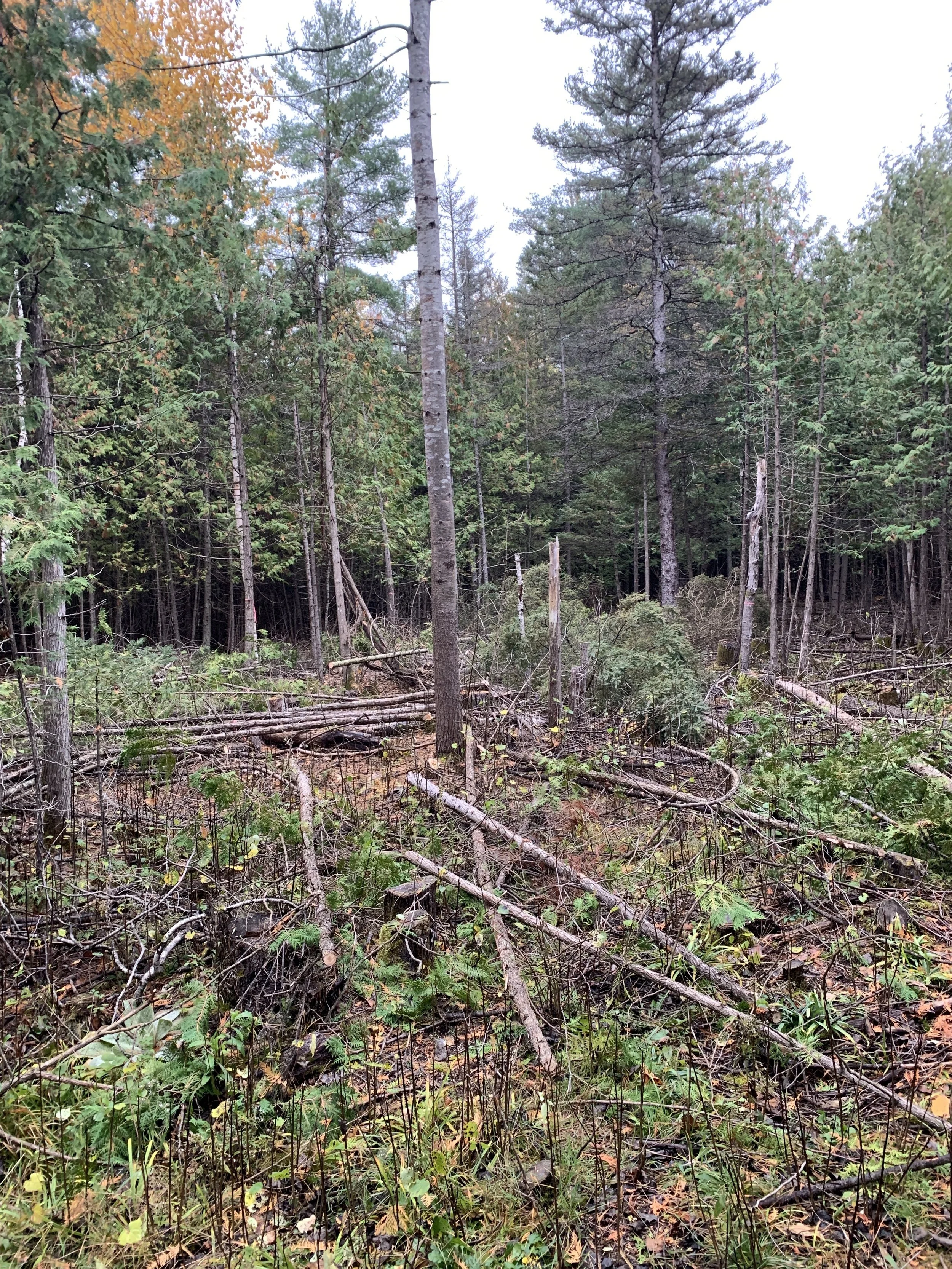
In this image, 1/4 acre of aspen has been harvested, leading the root system to sprout vigorously to grow new trees. However, the thousands of small aspen sprouts have been browsed and prevented from growing into new trees. This is one reason why harvests meant to regenerate aspen must be relatively large: deer (and in some areas, elk) aggressively browse all the tender new growth. Only multiple acres, each with several thousand saplings, are likely to be able to overwhelm the deer and regenerate a well-stocked forest stand. This provides a great example of why planting more trees instead of using browse protection and hoping some will make it past the deer without being browsed is very likely to fail.